

Table of Contents
- What Makes Mindful Living Essentials Worth Your Space
- Building a Mindful Morning Routine with Intentional Tools
- Creating a Mindful Evening Routine for Rest and Reflection
- Mindfulness Tools for Home That Support Daily Grounding
- How to Create a Mindful Daily Routine Without Overwhelm
- Common Mistakes That Derail Mindful Routines
- Frequently Asked Questions
Last Updated: October 14, 2026
What Makes Mindful Living Essentials Worth Your Space
Creating a mindful daily routine doesn't require emptying your wallet or filling your home with clutter. The best mindful living essentials for daily rituals genuinely support your practice, not distractions masquerading as wellness products.
The real question isn't whether you need more stuff. It's whether each piece serves a clear purpose in your ritual. A meditation cushion that gathers dust isn't an essential. A journal you actually use becomes one. This distinction matters because mindfulness is about presence, not possession.
Many people approach mindful living as a shopping list, accumulating candles, diffusers, and meditation apps, then feel disappointed when the items don't transform their stress levels.
Below, we'll cover how to build a mindful living routine that sticks, which essentials genuinely move the needle, and how to avoid turning self-care into another source of anxiety.
Building a Mindful Morning Routine with Intentional Tools
Your morning sets the tone for everything that follows. A mindful morning routine doesn't mean waking at 5 a.m. or spending an hour in silence.
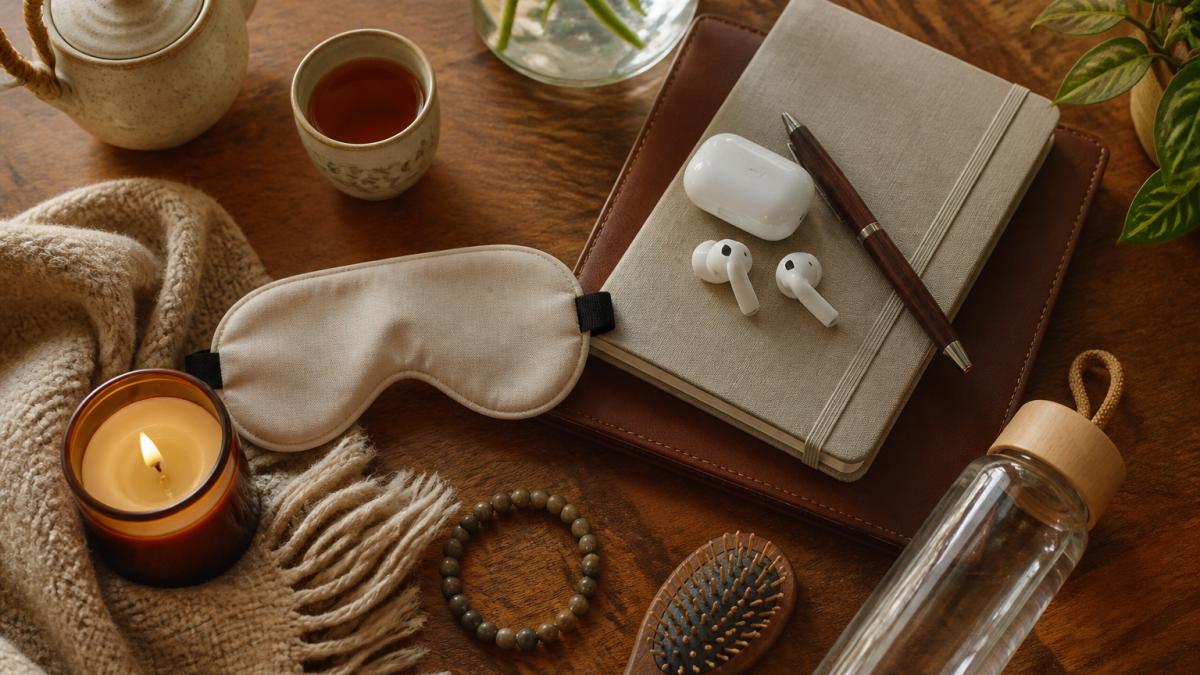
Start with what you already have. Before buying anything new, identify one small anchor: a spot in your home, a favorite mug, or a corner with natural light.
To deepen the practice, consider tools that support stillness. The LED Color-Changing Wall Light from ELTStores ($50.21) cycles through seven colors with a remote control, letting you set a calm blue or soft white tone that signals rest to your nervous system and creates a psychological boundary between sleep and wakefulness.

Scent anchors memory and presence. The Purple Sand Ceramic Backflow Incense Burner (Large) from ELTStores ($68.99) is handcrafted from high-quality purple clay and works with agarwood or sandalwood incense.
A journal sits beside your tea. Writing three sentences about what you want from your day takes two minutes and anchors your intentions before reactivity takes over. You don't need an expensive leather journal, lined paper works.
Creating a Mindful Evening Routine for Rest and Reflection
Evening rituals prepare your body and mind for rest.
Your evening routine should slow you down, not check another box. Begin 30 minutes before sleep by reducing light and stimulation. Dim your overhead lights or switch to warmer tones.
Reflection is the core of evening mindfulness. Gratitude journaling retrains your brain to notice what's working instead of what's broken.
A bath or warm shower signals transition; warm water alone triggers the parasympathetic nervous system. For scent, use the incense burner in an adjacent room or light a stick of sandalwood.

The Memory Foam Eye Mask from ELTStores ($28.13) molds to your face shape and blocks light completely, deepening sleep quality.
Sleep is where your nervous system repairs itself. Better rest amplifies everything else you do during the day.
Mindfulness Tools for Home That Support Daily Grounding
Your physical space either supports mindfulness or works against it. You don't need to redesign your home, but small changes create measurable shifts. Choose tools by function first, form second, and price last.
How to Choose a Mindful Living Essential (Selection Criteria)
Before adding anything to your space, run each candidate item through five filters. Most buying guides skip this step, which is why so many wellness purchases end up in a drawer.
- Does it remove a specific barrier? A tool should solve a named problem: light that disrupts sleep, a room with no quiet corner, a phone that pulls attention at bedtime. If you can't name the barrier, you don't need the item.
- Can you use it in under two minutes? Rituals that require setup get skipped. A mask you slip on, a light you tap once, a journal already open on the table, these survive busy weeks.
- Is it durable and repairable? Reusable beats disposable on both cost-per-use and waste. A ceramic burner or a memory foam mask that lasts years outperforms a monthly subscription box on every measure that matters.
- Does it fit your space? Small apartments, shared homes, and rooms with limited outlets all constrain what works. Measure before you buy.
- Can you return it? Buy from sellers with a clear return window so a wrong guess doesn't become permanent clutter.
Ambient Lighting to Set Your Mood
Light shapes your circadian rhythm and emotional state. Bright overhead light keeps you in activation mode. Soft, warm light signals safety and rest. The Centers for Disease Control and Prevention notes that light exposure timing affects sleep and alertness, which is why dimming your environment in the evening is a practical lever, not a wellness cliché.
The LED Color-Changing Wall Light cycles through seven colors with a smart remote. Use it to create zones: blue or purple for focus work, warm white for relaxation, soft amber for evening wind-down. Energy-efficient Bridgelux LED chips keep electricity costs down, and one fixture replaces multiple lamps.
Many people overlook lighting because it feels invisible. You notice harsh light immediately but don't consciously register why soft light feels better. That's the point: good ambient lighting supports your nervous system without demanding attention.
Scent and Sensory Rituals
Smell is the only sense directly connected to your limbic system, which processes emotion and memory. This is why scent anchors ritual so powerfully.
The Purple Sand Ceramic Backflow Incense Burner creates a multisensory experience: you're watching the smoke cascade, hearing the subtle crackle, and breathing intentionally with the ritual. The handcrafted purple clay and landscape patterns make it a decorative piece that supports function.
Incense works best with intention. Light it as a signal: "For the next 20 minutes, I'm meditating" or "This is my creative time." The scent becomes a psychological cue that your brain learns to recognize.
Sleep Support for Deeper Rest
Rest is where your practice compounds. Poor sleep undermines your mood, focus, and capacity for presence.
Purple Sand Ceramic Backflow Incense Burner (Large) →
The Memory Foam Eye Mask blocks light completely, which matters for melatonin production. Unlike thin fabric masks that let light seep in, its contoured design creates a seal, and the memory foam molds to your face so it doesn't slip or create pressure points that wake you up.

Travel disrupts sleep because your environment changes. The mask is lightweight and packable, so your sleep ritual stays consistent at home or in a hotel. Many frequent travelers report it improves their sleep more than any app or supplement.
Accessibility and Small-Space Adaptations
A mindful home should work for the body and space you actually have, not an idealized version of either.
- Limited mobility or chronic pain: Seated breathwork, a chair by a window, and a lap tray for journaling replace floor cushions and standing rituals. The eye mask and wall light require no physical effort to use.
- Sensory sensitivities: Skip incense and strong scents entirely. Use unscented candles, a warm mug held in both hands, or textured objects like a smooth stone or a soft blanket as your sensory anchor.
- Shared homes and roommates: Choose tools that don't impose on others. Headphones for guided audio, a small desk lamp instead of a room-wide fixture, and a journal rather than a spoken practice keep your ritual private.
- Small spaces: A single wall light replaces multiple lamps. A burner or diffuser on a shelf doubles as decor. A mask and journal store flat.
How to Create a Mindful Daily Routine Without Overwhelm
The biggest mistake is treating mindfulness as an addition to an already-packed day. You don't need to add more; replace one reactive habit with one intentional one.
Start Small: The 5-Minute Foundation
Five minutes is enough to shift your nervous system. A five-minute practice you actually do beats a 30-minute practice you skip.
Your 5-minute foundation:
- 1 minute: Sit in one spot with a warm drink
- 2 minutes: Notice five things you can see, hear, or feel
- 1 minute: Write one intention or one thing you're grateful for
- 1 minute: Three deep breaths before moving on
This takes less time than checking email. Do it before your phone and before breakfast, because your attention is clearest first thing.
Budget Tiers: Premium, Mid-Range, and No-Cost Options
Mindfulness requires consistency, not spending.
No-cost options: Sit by a window with water. Write in a notebook you have. Walk outside. Breathe deeply. These work. They cost nothing.
Mid-range ($50-100): Add one quality tool that serves multiple purposes. The LED Color-Changing Wall Light ($50.21) or the Memory Foam Eye Mask ($28.13) each address a specific barrier, poor sleep or lighting that disrupts your rhythm. Choose based on what's actually limiting your practice.
Premium ($100+): The Purple Sand Ceramic Backflow Incense Burner ($68.99) is an investment in ritual: beautiful enough to display permanently, functional enough to use daily, and a multisensory anchor that deepens practice. If you'll use it, this tier pays for itself in consistency.
The mistake is starting at premium. Do the free version for two weeks first, then buy one item that addresses your actual bottleneck, not what looks good on Instagram.
| Budget Tier | Best Option | Price | What It Solves |
|---|---|---|---|
| No-Cost | Window sitting + journaling | Free | Grounding without tools |
| Mid-Range | Memory Foam Eye Mask | $28.13 | Sleep quality and consistency |
| Mid-Range | LED Color-Changing Wall Light | $50.21 | Ambient lighting for mood |
| Premium | Purple Sand Incense Burner | $68.99 | Multisensory ritual anchor |
Common Mistakes That Derail Mindful Routines
Understanding what doesn't work is as valuable as knowing what does.
Mistake 1: Starting too big. A 30-minute meditation practice sounds impressive. You'll skip it after three days. Five minutes you actually do beats 30 minutes you don't.
Mistake 2: Buying before practicing. You don't know what you'll use until you try. Start with nothing.
Mistake 3: Treating mindfulness as another obligation. The moment your practice feels like a chore, it stops working.
Mistake 4: Expecting immediate transformation. Mindfulness is cumulative. After two weeks of consistency you'll react less quickly to stress; after a month your baseline mood shifts.
Mistake 5: Forgetting that consistency beats intensity. Five minutes every day beats 60 minutes once a week. Your nervous system learns through repetition, not heroic effort.
Creating space for rest, reflection, and gentle joy doesn't require a lifestyle overhaul. It requires choosing one small anchor and protecting it.
Frequently Asked Questions
What are some good examples of mindfulness rituals I can start today?
Simple rituals include a 5-minute breathing practice upon waking, journaling three things you're grateful for, mindful tea sipping, a short walk in nature, gentle stretching, or a guided meditation before bed. You don't need special tools, silence and intention are enough. Adding mindful living essentials like a quality eye mask or ambient lighting can deepen the experience, but consistency matters more than equipment.
How do I create a mindful morning routine that actually sticks?
Start with one small practice: drink water slowly, do three deep breaths, or write one intention. Place a reminder where you'll see it. Add one element at a time over two weeks before expanding. The Purple Sand Ceramic Backflow Incense Burner ($68.99) or LED Color-Changing Wall Light ($50.21) can anchor your space, but a notebook and pen work just as well. The key is repetition, not perfection.
What's the difference between mindful living essentials and just buying more stuff?
True mindful living essentials serve a clear purpose in your daily rituals and support grounding, reflection, or rest. They're chosen intentionally, not impulsively. Before purchasing, ask: Will I use this regularly? Does it support a specific ritual? Can I afford it without stress? The most powerful mindful living essentials cost nothing, silence, breath, and presence. Physical tools work best when they replace distractions, not create them.
Can I build a mindful routine on a tight budget?
Absolutely. Free practices include meditation, journaling, breathing exercises, gratitude reflection, and nature walks. A pillow, blanket, or candle you already own can anchor your evening routine. If you want to invest, the Memory Foam Eye Mask ($28.13) supports better sleep, and the 7-in-1 Multifunctional Aroma Holder ($16.89) brings scent into your car or space affordably. Start with what you have and add one item only if it genuinely fits your routine.