

Table of Contents
- Why Aesthetic Design Matters in Small Spaces
- How to Avoid Clutter in Small Apartments
- Multi-Functional Furniture for Small Spaces
- Lighting and Color: Creating Depth and Mood
- Aesthetic Wall Decor for Renters
- Sustainable and Budget-Conscious Design Choices
- Creating Zones and Visual Boundaries
- Frequently Asked Questions
Last Updated: September 22, 2026
Why Aesthetic Design Matters in Small Spaces
Creating aesthetic home decor for small apartments isn't a luxury, it's a necessity for well-being. When you live in limited square footage, every visual choice compounds. A cluttered corner doesn't just waste space; it creates mental friction. A thoughtfully curated corner becomes your refuge.
The psychology of small-space living is straightforward: your environment directly influences your mood, productivity, and sense of calm. According to research on environmental psychology from the American Psychological Association, our surroundings affect stress levels, focus, and emotional regulation. In a small apartment, poor design choices feel inescapable. Good ones feel intentional and restorative.
Aesthetic home decor for small apartments becomes transformative when every object earns its place through function, beauty, or both. At ELTStores, we understand that small spaces demand intention. The goal is creating an environment that feels spacious and calm rather than cramped and overwhelming.
Three factors transform a small apartment from suffocating to sanctuary: visual clarity, intentional lighting, and multifunctional furniture.
How to Avoid Clutter in Small Apartments
Clutter is a cognitive load: visual disorder increases cortisol and impairs decision-making. In small apartments, every visible item competes for attention. The goal isn't minimalism; it's intentional curation aligned with your chosen aesthetic.
Define your aesthetic first, then audit against it. Japandi calls for clean lines, natural materials, and neutral tones. Maximalism requires a cohesive color palette and pattern language. This framework prevents the "maybe someday" trap because every object must serve your aesthetic.
Establish a three-tier ownership system:
Tier 1: Essential & Aligned, Items that serve function and match your aesthetic (your bed, desk, core furniture, everyday dishes). These earn permanent space.
Tier 2: Seasonal & Rotational, Decor, textiles, and accessories you swap with seasons or rotate quarterly (throw pillows, wall art, plants). Store these in labeled bins; rotation prevents fatigue and keeps spaces feeling fresh without buying more.
Tier 3: Aspirational (Limit to 3-5 items), Objects you love but don't use regularly. A vintage camera, a decorative bowl, a coffee table book. These should be displayed, not hidden, because they justify their space through beauty alone.
Vertical storage is essential: wall-mounted shelves, tall bookcases, and over-door organizers transform unused wall space. Use clear containers for off-season items so you can see what you own without opening every box.
Adopt the "one in, one out" rule: before bringing anything new in, remove something of similar size. This forces alignment with your chosen style and ensures higher-quality, cohesive purchases.
Embrace negative space as a design choice. Empty surfaces reduce visual noise and create psychological breathing room. Aim for 40% of visible surfaces to be clear; this ratio balances functionality with calm.
Multi-Functional Furniture for Small Spaces
Multifunctional furniture is essential: beds with storage drawers, coffee tables that double as workspaces, sofas with hidden storage, and wall-mounted folding desks work harder so your apartment doesn't need to be larger.
Prioritize quality over quantity: a well-made piece serving two purposes beats two mediocre single-purpose pieces. Choose clean lines and neutral finishes that adapt to different styles.
Storage ottomans, murphy beds, and convertible dining tables solve real problems. Hidden storage reduces anxiety about clutter and creates a sense of control.
Consider your actual lifestyle before buying. A murphy bed is brilliant if you work from home and need a daytime office. It's wasted money if you never use your living room for anything but relaxing. Match multifunctional pieces to how you actually live, not how you think you should live.
Lighting and Color: Creating Depth and Mood
Lighting transforms small spaces more than any other element. Good lighting creates illusions of space, depth, and calm.
Layer three types of lighting: ambient (overall brightness), task (focused light), and accent (decorative). Small apartments need fewer fixtures than larger homes.
Warm ambient lighting creates psychological comfort. Aim for warm white tones (2700K) in living areas and bedrooms; this feels more intimate and spacious than harsh white light.
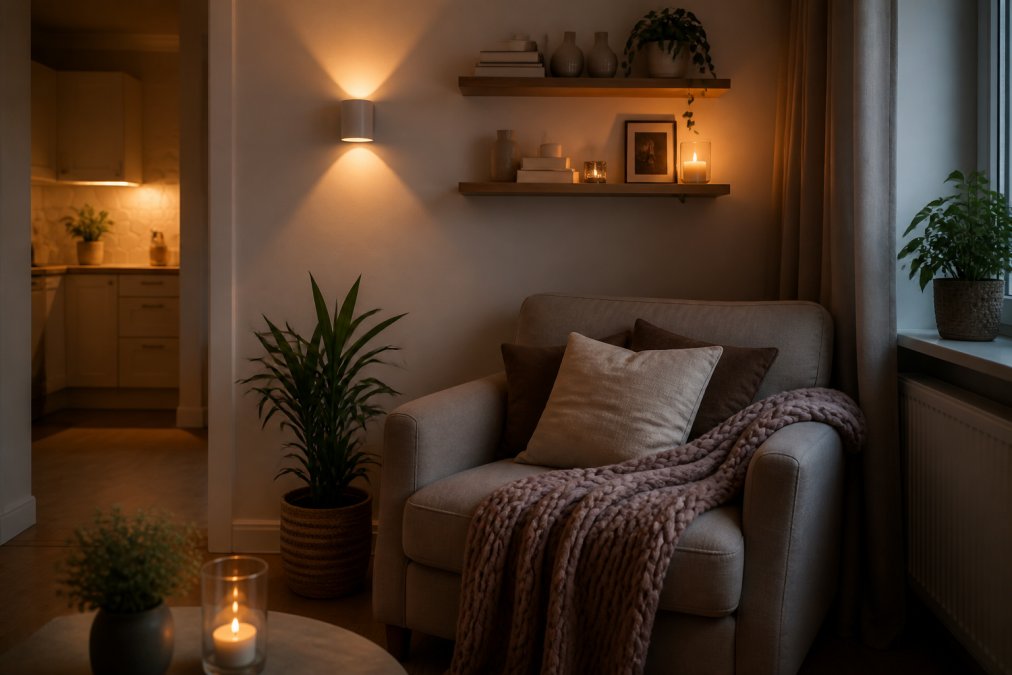
The LED Color Changing Wall Light from ELTStores ($50.21) cycles through seven colors with a smart remote, handling ambient lighting while adapting to your mood, warm tones for relaxation, cool for focus.

Neutral walls (whites, soft grays, warm beiges) create a visual foundation. Add color through textiles, artwork, and accessories you can change seasonally without repainting.
Concentrate accent colors: a single accent wall, bold throw pillow, or statement art creates visual interest without overwhelming. Geometric prints and abstract art add personality while maintaining clarity.
Aesthetic Wall Decor for Renters
Renters can't paint or drill, forcing better design thinking. Wall decor must be intentional, removable, and visually strong. The strategy shifts from "what can I install" to "what aesthetic story do my walls tell."
Wall decor adds personality and affects perceived depth. Strategic pieces make small spaces feel intentional and curated rather than cramped.
Gallery Walls for Style Definition
LED Color-Changing Wall Light →
Gallery walls work beautifully for renters using removable adhesive strips. Intentionality is key: consistent frame finishes or deliberate size progressions feel editorial, not cluttered.
Choose a gallery style that matches your aesthetic:
- Minimalist/Japandi: Black or natural wood frames, 3-5 pieces maximum, with significant white space between frames. Include one or two pieces of negative space (empty frame or blank canvas) to reinforce the aesthetic.
- Maximalist: Mix frame colors, sizes, and materials. Include textiles, small mirrors, and 3D objects alongside flat art. Density is the point; fill 60-70% of wall space.
- Scandinavian: Light wood frames, black-and-white photography or botanical prints, arranged in a loose grid. Keep spacing consistent and symmetrical.
- Eclectic: Thrifted frames in varying finishes, a mix of art styles and mediums, arranged organically. The cohesion comes from a shared color palette (warm tones, cool tones, or a mix of metallics).
Plan on the floor using kraft paper cut to frame size, then tape to the wall to visualize before hanging. This prevents spacing frames too far apart, which breaks visual continuity.
Removable Wallpaper and Wall Decals
Removable wallpaper and decals add color and pattern without commitment. Quality peel-and-stick options last 3-5 years and remove cleanly from smooth walls.
One feature wall is enough. Apply it to the wall you see first or behind your bed/sofa to anchor the space without overwhelming it.
Statement Pieces and Focal Points
One large, strong piece beats three weak ones. A 24x36-inch canvas, tapestry, or sculptural hanging anchors the room and creates a focal point.
Position statement pieces at eye level above furniture. Pair with negative space; don't crowd with other wall decor.
Floating Shelves as Display and Storage
Floating shelves serve double duty as storage and display space. Styled with a mix of books, small plants, and curated objects, they add visual interest while keeping items accessible. The key is restraint: a shelf packed with objects feels cluttered, while intentionally spaced items with breathing room feel curated.
Use the "rule of thirds" for shelf styling: one-third functional items (books, baskets), one-third decorative objects (plants, vessels, art), one-third negative space. This ratio prevents visual overload while maintaining visual interest. Vary heights and depths; a shelf of uniform-height books feels flat, while mixing tall and short items creates dimension.
For renters, removable floating shelves (Command brand offers renter-friendly options up to 25 pounds) provide storage without drilling into studs. Pair them with removable adhesive strips rated for the weight you're carrying.
Mirrors for Depth and Light
Mirrors are the renter's secret weapon for small spaces. A large mirror opposite a window reflects natural light and creates the illusion of a second window, making the space feel larger and brighter. Position mirrors to reflect light sources, not clutter. A mirror reflecting a messy corner amplifies the problem.
Choose a mirror frame that matches your aesthetic: a simple black frame for minimalist spaces, an ornate gold frame for maximalist rooms, or a natural wood frame for Scandinavian or Japandi styles. A single large mirror (36x48 inches or larger) has more impact than multiple small mirrors in a small space.
Textile Wall Hangings
Tapestries, woven wall hangings, and fabric art add texture and warmth without the permanence of paint. A macramé wall hanging, a vintage textile, or a modern woven piece introduces pattern and dimension while remaining completely removable. These work especially well in bedrooms and living areas where they soften hard walls and add acoustic dampening.
Choose textiles that complement your color palette and aesthetic. A neutral linen tapestry works for minimalist spaces; a bold patterned textile anchors a maximalist room. Hang textiles using removable adhesive strips or a tension rod mounted with Command hooks.
Sustainable and Budget-Conscious Design Choices
Building aesthetic home decor for small apartments doesn't require spending heavily. In fact, constraints often force better design decisions. Budget limitations push you toward multifunctional pieces and thoughtful curation rather than accumulation.
Thrift stores and secondhand marketplaces offer quality furniture at a fraction of retail cost.
Creating Zones and Visual Boundaries
Open-concept small apartments require intentional zoning to feel organized. Without walls, you need visual and spatial cues that define different areas. This creates psychological separation even when physical separation isn't possible.
Frequently Asked Questions
What is the best way to arrange aesthetic home decor for small apartments without creating visual clutter?
Start with a curated color palette of 2-3 neutral tones, then add 3-5 statement pieces rather than many small items. Use vertical storage, floating shelves, and multifunctional furniture to keep surfaces clear. Group similar items together and display only what brings you joy or serves a purpose. This approach maintains aesthetic appeal while preserving the openness your small space needs.
How can renters add aesthetic wall decor without damaging walls or losing their security deposit?
Renter-friendly options include removable wallpaper, adhesive hooks rated for your wall type, fabric wall hangings, and lean-to artwork. Floating shelves with damage-free mounting hardware work well for displaying small decorative objects. Consider rotating artwork seasonally using poster frames or clipboards. These modifications create visual interest and personalization while remaining completely reversible.
What colors and lighting work best for small apartment spaces?
Neutral palettes with soft, warm lighting make small spaces feel larger and more inviting. Layer ambient lighting with task lighting to create depth and mood. An LED color-changing wall light like ELTStores's option ($50.21) offers flexibility to shift ambiance throughout the day. Avoid harsh overhead lighting alone; instead, combine soft wall lights, table lamps, and accent lighting to enhance spatial awareness and create distinct zones.
How does multifunctional furniture help with aesthetic design in small apartments?
Multifunctional pieces like storage ottomans, murphy beds, and nesting tables reduce visual clutter by combining storage with decor. They allow you to maintain a cohesive, curated look while maximizing usable space. Choose pieces that match your aesthetic, minimalist, eclectic, or transitional, so they function as both practical solutions and design elements. This approach eliminates the need for separate furniture items, keeping your layout clean and intentional.