

Table of Contents
- Why Dog Owners Look for Clicker Alternatives
- Verbal Markers: Using Marker Words for Dog Training
- Verbal Marker Training for Dogs: Building Consistency
- Hand Signals and Visual Markers
- Dog Training Clicker Alternatives for Sensitive Dogs
- Dog Training Without a Clicker: Creating Your Own Sound Markers
- Choosing the Right Alternative for Your Dog and Training Setting
- Common Mistakes When Using Clicker Alternatives
- Frequently Asked Questions
Last Updated: October 11, 2026
Why Dog Owners Look for Clicker Alternatives
Not every dog thrives with a traditional clicker, which is why dog training clicker alternatives exist. Some startle at sharp sounds, others live in noise-sensitive environments, and some handlers find clickers awkward when managing a leash, treats, and a dog simultaneously.
A clicker is just a tool for marking the exact moment your dog does something right. What matters is consistency, you can mark behavior with dozens of different sounds that work just as well.
Verbal Markers: Using Marker Words for Dog Training
A verbal marker is a specific word that bridges the behavior and the reward, helping your dog learn to associate that word with success.
Common verbal markers include "yes," "good," "mark," or "got it." Pick one word and use it the same way every single time.
How to Condition a Verbal Marker
Start in a quiet space with high-value treats. Here's the process:
- Day 1-2: Foundation pairing. Say your marker word (like "yes") in a clear, upbeat tone, then immediately deliver a treat within 0.5 seconds. Repeat this 15-20 times per session, with 2-3 sessions per day. Your dog doesn't need to do anything yet; they're learning that the word predicts food.
- Day 3-4: Consistency check. Continue pairing the word and treat. Watch your dog's eyes and body language. When your dog's head snaps toward you or their eyes brighten the moment you say the word (before the treat appears), the association is forming.
- Day 5: Real training introduction. Now use the marker during actual training. Ask for a simple behavior (sit, touch, look at you). The instant your dog completes it, say your marker word and deliver the treat within one second.
- Week 2 onward: Proof and distance. Practice in different rooms and gradually introduce mild distractions (a door closing, another person in the room). Your dog should still respond to the marker the same way.
Timing is critical: mark within one second of the behavior, or your dog won't connect the word to what they did. The marker freezes the moment of success in your dog's mind.
Best Marker Words and Their Limitations
"Yes" is quick and natural but risks dilution from everyday speech ("Yes, you can go outside"), weakening its power as a training marker.
"Good" risks confusion if used casually as praise, so many trainers avoid it.
"Mark" is clear, distinct, and unlikely to slip into everyday speech, keeping it powerful.
Why Verbal Markers Can Fail
Unlike a clicker, your voice changes with emotion, fatigue, and environment. A tired handler says "yes" differently than an energized one, requiring more awareness during training.
Distance and noise are the biggest limitations. A clicker's sharp sound carries farther and cuts through background noise. In parks, group classes, or at 20+ feet, a verbal marker gets lost. In noisy environments, consider a whistle or mechanical marker instead.
Handler consistency requires discipline. Monitor your tone, volume, and timing. Some handlers record their marker word and play it back to eliminate voice variation.
Tone variation can confuse your dog. Pick a specific, neutral tone and stick to it.
Verbal Marker Training for Dogs: Building Consistency
Consistency is the real skill with verbal markers. Your dog needs to hear the same word, with similar energy, every time they do the right thing.
One approach: pick a specific tone and volume for your marker word. Use it only for marking, not for casual praise. When you say "yes" as a marker, it means a reward is coming. When you say "good job" as general praise, it's just encouragement.
Some handlers record their marker word and play it back during training. This removes the human voice variation entirely. It's an advanced technique, but it works.
Hand Signals and Visual Markers
Hand signals work well for dogs with hearing loss, noise sensitivity, or situations where sound isn't practical (libraries, quiet moments, noisy environments).
A hand signal is any consistent gesture paired with a reward, thumbs up, hand shape, finger snap, or leg tap. Consistency matters, not the gesture itself.
To condition a hand signal:
- Make the gesture and immediately give a treat
- Repeat 15-20 times per session
- Practice for 3-5 days before using it during training
- Watch for your dog to anticipate the treat when they see the signal
Hand signals work best at close range and require your dog to be looking at you, limiting their use for distance training.
Dog Training Clicker Alternatives for Sensitive Dogs
Before switching to a softer marker, ask: does your dog need a quieter tool, or can they be gradually acclimated to the standard clicker sound?
Should You Switch or Acclimate?
If your dog startles at the clicker, you have two paths:
Gradual acclimation: Click in another room, then slowly move closer over several days while pairing with treats. Many dogs adapt within 1-2 weeks, keeping the clicker's reliability while reducing sensitivity.
Switch to a softer marker: If your dog shows genuine noise sensitivity or acclimation fails after two weeks, choose a quieter alternative.
Recordable Pet Talking Buttons →
Softer Sounds and Quieter Markers
A softer clicker produces a muted click rather than a sharp snap. The trade-off: quieter for your dog but also harder for you to hear in noisy environments. Best for home training with noise-sensitive dogs.
A pen click is softer than a standard clicker and produces a reliable mechanical sound. It's portable, requires no special equipment, and creates a distinct sound. Condition it the same way: pair the click with a treat 15-20 times before real training.
A tongue click is quieter than words but varies with pressure and tongue position. Practice until automatic. Best for close-range training and quiet environments.
A finger snap is louder than a tongue click but quieter than a clicker. It's always with you but varies in volume, making it less reliable.
Whistles and Mechanical Pens: When to Use Them
A whistle produces a clear, consistent sound that carries 30+ feet. It works well for outdoor training but is too loud for noise-sensitive dogs.
A mechanical pen is portable, consistent, and less startling than clickers. Many professional trainers use pens. Condition the same way: pair the click with a treat 15-20 times before training.
Conditioning a Softer Marker
Regardless of which softer marker you choose, the conditioning process is identical:
- Day 1-2: Quiet space pairing. Make the sound (pen click, tongue click, soft clicker) and immediately deliver a high-value treat. Repeat 15-20 times per session, 2-3 sessions per day. Your dog doesn't need to do anything yet.
- Day 3-4: Watch for anticipation. Continue pairing the sound and treat. When your dog's eyes light up or they move toward you the moment they hear the sound (before the treat appears), the association is strong.
- Day 5: Real training. Use the marker during actual training. Ask for a simple behavior, mark it the instant it happens, and deliver the treat within one second.
- Week 2 onward: Proof in new environments. Practice in different rooms and gradually introduce mild distractions. Your dog should respond to the marker consistently.
Comparing Softer Markers: Reliability and Range
| Marker | Sound Level | Consistency | Carries Distance | Best For |
|---|---|---|---|---|
| Soft clicker | Very quiet | High | 10-15 feet | Noise-sensitive dogs, home training |
| Pen click | Quiet | High | 15-20 feet | Noise-sensitive dogs, portable training |
| Tongue click | Very quiet | Medium | 5-10 feet | Close-range training, hands-busy situations |
| Finger snap | Quiet-medium | Medium | 10-15 feet | General training, no equipment needed |
| Whistle | Loud | Very high | 30+ feet | Outdoor training, distance work (not for noise-sensitive dogs) |
Quieter markers are gentler on sensitive dogs but don't carry as far. For outdoor or distance training, move closer or use a louder marker.
Dog Training Without a Clicker: Creating Your Own Sound Markers
You don't need to buy anything to mark behavior. Many household items create distinct sounds that work as markers.
Everyday Objects That Work as Markers
Household items work as markers: a spoon on glass, coin in a container, bell, or key ring. Pick one that suits your dog's sensitivity and training environment.
Vocal Sounds and Whistles
Vocal sounds like mouth whistles, kissing sounds, and tongue clicks work for close-range training and require no equipment.
Choosing the Right Alternative for Your Dog and Training Setting
The best alternative depends on three factors: your dog's sensitivity to sound, your training environment, and your personal preference.
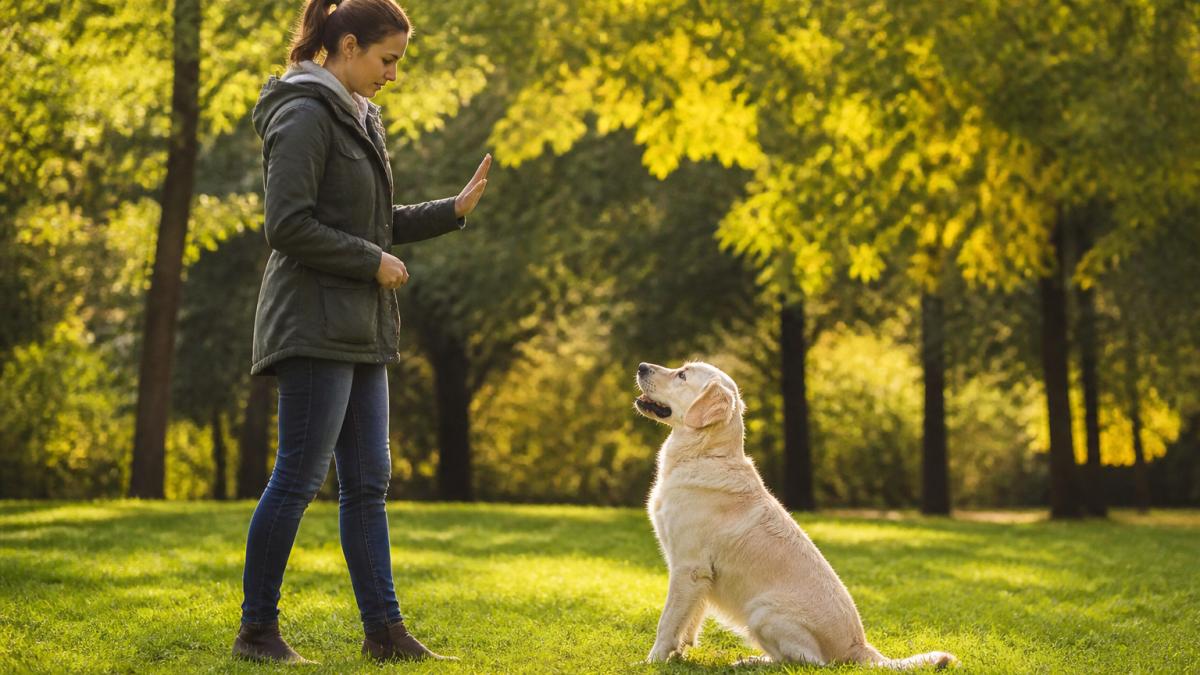
Choose based on your dog's sensitivity, training environment, and personal preference. Noise-sensitive dogs: hand signals or soft markers. Outdoor/distance: whistles or verbal markers. Apartments: verbal markers, hand signals, or pen clicks. Hearing loss: hand signals. Many trainers use multiple markers, your dog can learn several as long as you're consistent with each.
Common Mistakes When Using Clicker Alternatives
Inconsistency is the biggest mistake. Varying how you use your marker slows progress.
Using the marker without a reward follows. The marker only works if it predicts something good. Mark the behavior, then immediately give a treat.
Marking the wrong moment happens often. You want to mark the exact second your dog does the right thing, not a second later.
Forgetting to condition the marker first is another trap. Don't jump straight into training with a new marker.
Changing markers mid-training confuses your dog. Pick one and commit. Your dog learns the specific sound or signal, not the abstract concept of a marker.
Training your dog doesn't require expensive equipment. What matters is consistency, timing, and clear communication.
ELTStores offers the Recordable Pet Talking Buttons as an alternative approach to pet communication.

Frequently Asked Questions
Can I use a word like 'yes' instead of a dog training clicker?
Yes, verbal markers like 'yes' or 'good dog' work as effective clicker alternatives when conditioned properly. Say the word immediately when your dog performs the desired behavior, then deliver a reward. The consistency of the word becomes the marker that tells your dog a reward is coming. The main limitation is that voice can vary in tone and volume, making timing slightly less precise than a mechanical clicker. However, many trainers successfully use verbal markers for all types of training.
What is the best marker word for dog training?
Short, sharp words like 'yes,' 'good,' or 'mark' work best because they're easy to say consistently and stand out from everyday conversation. Choose a word you can repeat the same way every training session. Some trainers prefer 'yes' because it's natural and quick; others use 'mark' to create clear separation from how they normally praise their dog. The best choice depends on what feels natural to you and what your dog can distinguish clearly.
How do I train my dog without a clicker?
Pick a consistent marker, a word, whistle, hand signal, or sound, and pair it immediately with a reward every time your dog performs the desired behavior. The marker tells your dog that a reward is coming. Practice the timing until you can deliver the marker within a split second of the behavior. Start in a quiet, distraction-free space, then gradually introduce the marker in busier environments. Consistency matters more than the type of marker you choose.
Can a dog training clicker be too loud for a sensitive dog?
Yes. Dogs with noise sensitivity, anxiety, or fear responses may flinch or become stressed by a standard clicker's sharp sound. For these dogs, softer alternatives like a quiet pen click, a whispered marker word, or a gentle hand signal work better. You can also purchase a softer clicker designed for noise-sensitive dogs. The goal is to use a marker your dog notices without causing stress, so test different options during low-pressure practice sessions to find what your dog tolerates best.