

Table of Contents
- Why Your Home Needs to Be a Sanctuary
- Step 1: Declutter to Clear Your Mind
- Step 2: Layer Calming Colors and Natural Light
- Step 3: Create a Dedicated Meditation Space at Home
- Step 4: Engage the Senses With Scent and Texture
- Step 5: Design a Tech-Free Zone for True Rest
- Step 6: Minimalist Home Sanctuary Tips for Small Spaces
- Step 7: How to Incorporate Mindfulness Into Busy Schedules
- Frequently Asked Questions
Last Updated: September 9, 2026
Why Your Home Needs to Be a Sanctuary
A peaceful home sanctuary is a dedicated space that supports mental restoration, emotional balance, and intentional rest. Many homes feel like storage units for stress, with constant notifications, visual clutter, and blurred work-life boundaries leaving little room for calm.
This guide walks through practical steps to transform any room, or even a single corner, into a restorative retreat. You do not need a large budget or a spare room to begin.
Step 1: Declutter to Clear Your Mind
The first step in creating a peaceful home sanctuary is removing visual and physical excess, because clutter directly competes with your attention. A cluttered surface signals that work is unfinished, keeping your stress response activated. Decluttering is not about stark minimalism; it is about curating a space that feels intentional.
Start with one surface, such as a nightstand. Clear it off and only return items used in the past week. For everything else, designate a "maybe" box in a closet; if you do not retrieve an item within a month, donate or discard it.
Step 2: Layer Calming Colors and Natural Light
Once the space is clear, the next layer involves color and light. A soothing palette includes soft whites, warm beiges, sage greens, and muted blues, which lower visual stimulation. You do not need to repaint; swapping throw pillows, a rug, or curtains can shift the energy significantly.
Natural light is equally important. Position your primary seating near a window and keep windowsills clear to maximize daylight. For evenings, ambient lighting matters more than overhead fixtures; a dimmable lamp or warm-colored wall light signals that the day is winding down.
Step 3: Create a Dedicated Meditation Space at Home
Creating a dedicated meditation space does not require a full room; a quiet corner with a comfortable floor cushion is often enough. This spot should be visually distinct, signaling that this is where you pause. A small side table, a plant, and a soft throw blanket help define the zone.
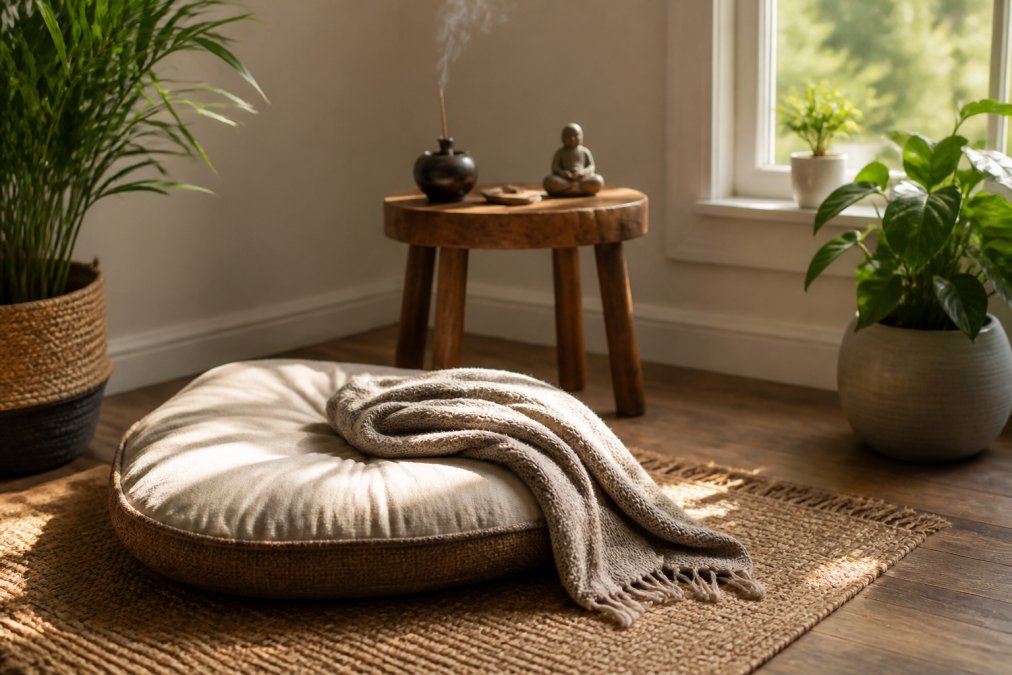
Consistency matters more than duration. Sitting in the same spot for five minutes each morning builds a stronger habit than occasionally meditating for thirty minutes. Keep a cushion and timer ready to remove barriers to starting.
To deepen the sensory experience, many people add a ritual object to this space. A handcrafted piece like the Purple Sand Ceramic Backflow Incense Burner uses aromatherapy and a gentle visual anchor to help quiet a racing mind. The soft plume of smoke creates a focal point that naturally slows your breathing.

Step 4: Engage the Senses With Scent and Texture
A peaceful home sanctuary engages more than just the eyes; scent and texture powerfully shift your emotional state. Scent is processed by the limbic system, tied to emotion and memory, which is why a fragrance can instantly calm you. Aromatherapy through incense, diffusers, or candles cues your body that it is safe to relax.
But most guides stop at "light a candle." To truly restore, design for all five senses, including sound, temperature, and the feel of every surface. This is sensory-based design, the difference between a room that looks calm and one that makes you feel calm within sixty seconds.
Scent: Layer, Don't Just Diffuse
A single fragrance note fades quickly because your nose habituates to it. Instead, build a scent "stack" with three layers:
- Base layer: A continuous, low-level scent from a reed diffuser or a ceramic warmer with a heat source. Choose grounding notes like cedarwood, sandalwood, or vetiver, these are associated with the parasympathetic nervous system's "rest and digest" response.
- Mid layer: An active ritual scent you light deliberately. A backflow incense burner, for example, creates a visual cascade of smoke while releasing a focused burst of fragrance. The act of lighting it becomes a mindfulness cue.
- Top layer: A fresh, clean note for resetting the air. A linen or eucalyptus mist sprayed on cushions or curtains can instantly lift a stale room without lingering heavily.
Avoid synthetic "ocean" or "fresh laundry" fragrances, which often contain phthalates that can trigger headaches. Look for products labeled "phthalate-free" or "100% essential oil." If sensitive to scent, place the diffuser or burner near a window so the fragrance circulates rather than concentrates.
Texture: The Science of Tactile Comfort
Texture adds emotional warmth that visual design alone cannot achieve. Mixing materials, a chunky knit blanket, a smooth ceramic vase, a woven jute rug, creates a tactile experience that feels curated. Pay attention to how objects feel in your hands, not just how they photograph.
For deep rest, prioritize weighted comfort. A weighted blanket (10-12 pounds for adults) applies gentle, even pressure, a mechanism called deep pressure stimulation, shown to lower heart rate and reduce cortisol (PubMed). If a full blanket feels too heavy, a weighted lap pad works well.
Fabric choice matters more than you might think:
- Cotton percale: Crisp, cool, and breathable, best for warm sleepers.
- Bamboo viscose: Silky and temperature-regulating, ideal for year-round comfort.
- Wool or cashmere: Traps warmth without trapping moisture; choose these for throws in cooler months.
- Linen: Textured and breathable, but can feel rough; wash it several times to soften.
Run your hand across every surface in your sanctuary. If a chair armrest feels cold or scratchy, add a throw. If a floor is hard, place a sheepskin or a thick cotton rug underfoot. Your feet and hands are dense with nerve endings; comfort there signals safety to your brain.
Sound: The Overlooked Sense
Most sanctuary guides ignore sound, yet noise is one of the fastest ways to spike stress. A ticking clock, humming refrigerator, or traffic keeps your nervous system on alert. To reclaim acoustic calm:
- Add soft surfaces, rugs, curtains, and upholstered furniture absorb sound and reduce echo. A bare room with hardwood floors amplifies every noise.
- Use a white-noise machine or a fan to create a consistent ambient hum that masks sudden, jarring sounds. Many sleep specialists recommend a steady 60-70 decibel background level for deep rest (the CDC).
- Choose a soundscape that matches your goal. Brown noise (lower, rumbling) is better for focus; pink noise (balanced, like rainfall) is better for sleep; nature sounds like birdsong or a gentle stream can lower heart rate within minutes.
Thermal Comfort: The Final Layer
Your body temperature drops as you fall asleep. A room above 72°F or below 60°F disrupts this (sleepfoundation.org). Aim for 65-68°F for sleep and keep a light blanket within reach. A heated throw or warm rice pack provides localized warmth without raising the room's temperature.
For the evening wind-down, a Memory Foam Eye Mask provides complete light-blocking and a pressure-free fit, which helps deepen rest. Blocking light is one of the most effective ways to signal melatonin production and transition into restorative sleep. Pair it with a weighted lap pad and a brown-noise track for a full sensory ritual that works even in a noisy apartment.

Step 5: Design a Tech-Free Zone for True Rest
The most overlooked element of a restorative home is the deliberate absence of screens. Devices are the primary source of mental intrusion; the ping of a notification, or even the sight of a phone face-up, fragments your attention and keeps you in a state of low-level vigilance.
Choose one area, ideally your bedroom or meditation corner, where devices are not allowed. Place a charging station outside this zone. When you sit in your sanctuary, your phone should be out of sight and out of arm's reach, creating a true boundary between the digital world and your restorative space.
To make this space more inviting than your screen, add an alternative source of entertainment. A Bluetooth speaker playing soft music or ambient sounds can fill the silence without the pull of a visual interface. The SZGMJIA LED Flame Speaker mimics realistic dancing flames with warm LED light while playing audio, creating a cozy, screen-free focal point that mimics the relaxation of a fireplace.

Step 6: Minimalist Home Sanctuary Tips for Small Spaces
Minimalist home sanctuary tips are essential for apartments and studios where every square foot serves multiple purposes. The sanctuary cannot be a separate room, so it must be defined through function and visual cues rather than walls. A folding screen, room divider, or tall plant can create the illusion of separation.
Prioritize functional storage that hides visual noise. Furniture that doubles as storage, an ottoman with a hollow interior or a bed frame with drawers, keeps belongings accessible but out of sight. In a studio, your meditation corner might be the space between the bed and the window, activated only when you lay down a cushion.
When space is limited, every object must earn its place through both beauty and utility. The LED Color-Changing Wall Light is ideal for this, as it adds ambient lighting and an artistic touch without consuming floor space. Its minimalist design suits hallways and entryways, turning a transitional area into a calming prelude to the rest of your home.
Step 7: How to Incorporate Mindfulness Into Busy Schedules
Learning how to incorporate mindfulness into busy schedules is the final step, because a sanctuary is only effective if you actually spend time in it. The misconception that mindfulness requires thirty minutes of solitude is false; micro-moments of awareness are more sustainable and equally restorative.
Anchor your practice to an existing habit. When you pour your morning coffee, take three conscious breaths before picking up your phone. When you sit in your sanctuary at night, focus on the sensations of the cushion and the scent for sixty seconds. These pauses interrupt the autopilot of a stressful day.
But "just be mindful" is not enough. You need a repeatable system. This three-tier framework adapts to how much time you have, from 30 seconds to 15 minutes, whether you are a busy parent, shift worker, or someone with back-to-back meetings.
Tier 1: The 30-Second Reset (Anywhere, Anytime)
This is for moments between tasks, after a stressful call, before a meeting, or while waiting for coffee. The goal is to interrupt the stress spiral, not to achieve deep calm.
The 5-4-3-2-1 Grounding Technique:
- 5 things you can see (name them silently)
- 4 things you can touch (feel the texture)
- 3 things you can hear (identify each sound)
- 2 things you can smell (or imagine a scent)
- 1 thing you can taste (or take one sip of water)
This technique forces your brain out of the limbic "fight or flight" loop and back into the prefrontal cortex. It is used in anxiety treatment protocols because it works quickly and requires no equipment.
Tier 2: The 3-Minute Breathing Space (Morning or Midday)
This is a structured practice with three steps, each lasting about one minute:
- Awareness: Sit or stand still. Ask yourself: "What is my experience right now?" Notice thoughts, feelings, and bodily sensations without trying to change them.
- Focus: Bring your full attention to your breath. Feel the air entering and leaving your nostrils, or the rise and fall of your chest. When your mind wanders, and it will, gently return to the breath.
- Expansion: Expand your awareness from the breath to your whole body. Notice any tension in your shoulders, jaw, or hands. On your next exhale, imagine releasing that tension.
Set a timer so you do not watch the clock. Consistency is key: doing this at the same time each day, say, right after lunch, builds a neural pathway that makes calm more accessible.
Tier 3: The 10-15 Minute Sanctuary Sit (Evening)
This practice uses your physical sanctuary. It is not about emptying your mind; it is about training your attention. A simple, evidence-based format is the body scan:
- Sit comfortably in your meditation corner, feet flat on the floor or crossed on a cushion.
- Close your eyes and take three deep breaths.
- Slowly move your attention from the top of your head down to your toes, spending 10-15 seconds on each body part. Notice sensations, warmth, tingling, pressure, without judging them.
- When you reach your feet, sit in silence for one minute, noticing your breath.
If your mind races, that is normal. The practice is not about stopping thoughts; it is about noticing when you drift and returning to the body. Each return is a "rep" for your attention muscle.
The "One Breath, One Object" Method
A practical framework for busy people is the "one breath, one object" method. Choose a single object in your sanctuary and dedicate one full inhale and exhale to simply looking at it. This trains your attention and reinforces the purpose of the space.
Try this variation: pick an object with a detail you have never noticed, the grain of the wood, the curve of the ceramic, the pattern on a leaf. This "novelty spotting" forces focused attention, the opposite of the diffuse, anxious scanning that stress creates.
Habit Stacking: The Secret to Consistency
Research on habit formation shows that linking a new behavior to an existing one dramatically increases follow-through. Specific stacks that work:
- After brushing your teeth at night: Sit on your meditation cushion for 60 seconds before getting into bed.
- After pouring your morning coffee: Take three breaths before adding cream or sugar.
- After locking your front door when you arrive home: Place your keys in a bowl and take one deep exhale before checking your phone.
- Before opening your laptop for work: Close your eyes and repeat a single word (like "calm" or "rest") for 10 breaths.
What to Do When You Miss a Day
The most common reason mindfulness practices fail is the "all-or-nothing" mindset. You miss one day, feel guilty, and abandon the practice. Instead, use the "never miss twice" rule: if you skip a day, do the practice the next day, even if it is only the 30-second version. This prevents the guilt spiral.
A sanctuary is only effective if you actually spend time in it. A tiered system that fits your schedule, from 30 seconds to 15 minutes, ensures mindfulness becomes a sustainable part of your daily life, not another item on your to-do list.
Frequently Asked Questions
How can I make my home a sanctuary on a budget?
Start with a deep declutter, which costs nothing and instantly reduces visual noise. Repurpose items you already own, like using a blanket to soften a chair or placing a plant on a shelf. Focus on one small area, like a single corner, rather than the whole house. Affordable changes, such as swapping a bright bulb for a warmer one or adding a memory foam eye mask for better sleep, create a peaceful home sanctuary without a remodel.
What are the essential elements of a peaceful home environment?
A peaceful home environment relies on reduced clutter, soft ambient lighting, and a soothing color palette. It also benefits from incorporating natural elements like plants and dedicated quiet zones. Crucially, it includes boundaries, like a tech-free area where you can disconnect. These elements work together to reduce stress and promote a sense of calm and mindfulness in your daily life.
How does physical clutter affect mental peace at home?
Physical clutter constantly signals to your brain that work is unfinished, which raises stress levels and makes it hard to relax. A cluttered space makes it difficult to focus and can lead to feelings of anxiety. By clearing surfaces and organizing your belongings, you create a visual calm that helps your mind settle. This quiet corner, free from distractions, helps make your home feel more restorative.
How do I create a dedicated meditation space at home if I have limited room?
You don't need a whole room. A quiet corner with a simple floor cushion or a chair is enough. Add a small tray for a candle or an incense burner to signal your brain that this spot is for rest. Keep it visually quiet and clutter-free. Even a few square feet by a window can become a powerful anchor for your daily mindfulness practice.