

Table of Contents
- How Interior Design and Home Environment Affect Mental Health
- Mental Health Benefits of Decluttering Your Space
- Minimalist Interior Design Pros and Cons
- Cozy Minimalist Home Decor: Balancing Calm and Comfort
- Minimalist Decor for Small Apartments: Practical and Affordable
- Stress Reduction Through Reduced Visual Distractions
- How to Test Minimalist Changes Without Full Commitment
- The Real Cost and Effort of Adopting Minimalist Decor
- Frequently Asked Questions
Last Updated: October 12, 2026
How Interior Design and Home Environment Affect Mental Health
The spaces we inhabit shape how we feel. A cluttered room creates mental friction. An open, thoughtfully designed space invites calm.
Your home environment influences stress, focus, and emotional well-being. In a room full of unnecessary objects, each item competes for attention, and that sensory overload contributes to fatigue and anxiety over time. A pared-down space reduces that cognitive demand.
Customers investing in intentional home design, whether through minimalist principles or carefully curated pieces, often report feeling more grounded in their spaces. The real question is whether is minimalist home decor worth it for mental health specifically, and for whom.
Environment and mental state interact on multiple levels. Lighting affects circadian rhythm and mood, color palettes influence emotional responses, and natural elements, plants, natural materials, daylight, correlate with reduced stress.
Mental Health Benefits of Decluttering Your Space
Removing unnecessary items creates immediate psychological relief. Decision fatigue decreases. Visual processing becomes easier.
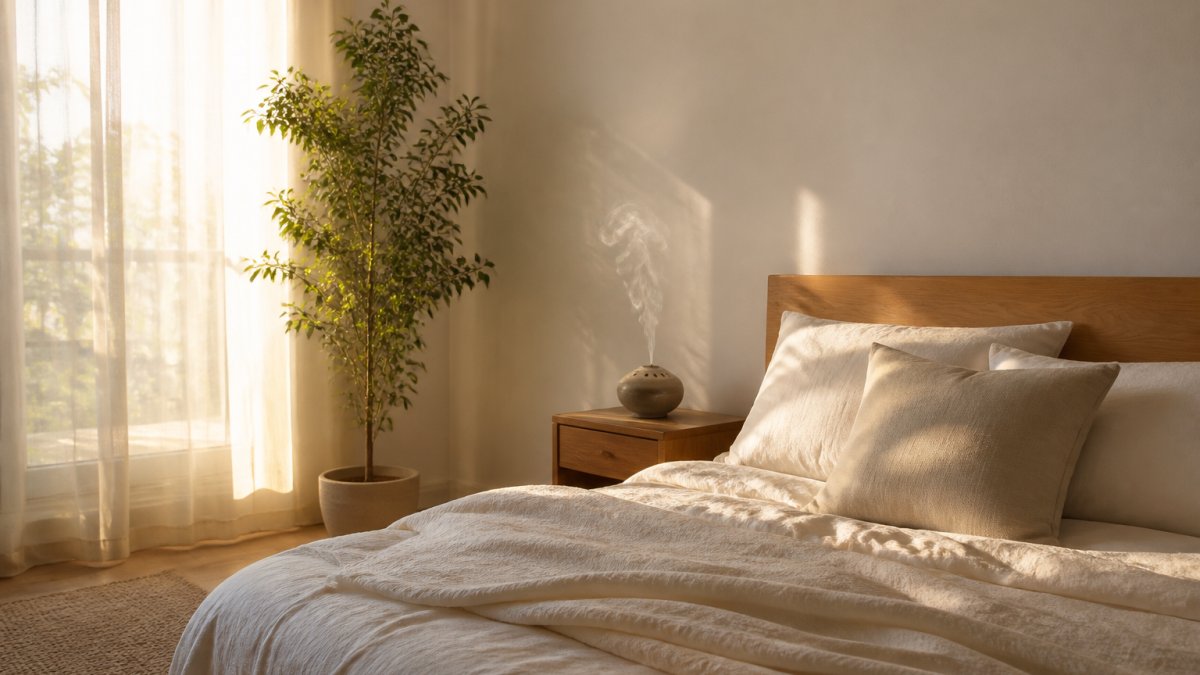
Every object represents a small cognitive load, should you move it, keep it, does it belong here? Multiply that across dozens of items and you're burning mental energy on non-decisions.
Decluttering itself provides a sense of agency: making intentional choices about your environment correlates with improved mood and control, especially valuable during stress or uncertainty.
Decluttering isn't minimalism. You can remove excess while keeping pieces that genuinely bring you comfort or joy, the goal isn't a barren room, it's removing what doesn't serve you.
Minimalist Interior Design Pros and Cons
Most articles list minimalist benefits and stop. The more useful question is comparative: minimalist versus maximalist, and which one actually supports your mental health.
Minimalist vs. maximalist decor: a side-by-side
| Dimension | Minimalist decor | Maximalist / layered decor |
|---|---|---|
| Visual load | Low; fewer objects compete for attention | High; many objects, patterns, and colors |
| Typical emotional effect | Calm, clarity, a sense of control | Warmth, stimulation, a sense of abundance |
| Best fit for | Sensory sensitivity, anxiety in busy spaces, small rooms | Sensory seekers, people who feel flat in sparse rooms |
| Main risk | Feels sterile, cold, or impersonal | Feels overwhelming or hard to maintain |
| Cleaning and upkeep | Lower surface area, easier to reset | More surfaces, more dusting, more decisions |
| Cost to start | Low if you declutter what you own; higher if you replace pieces | Variable; can be built gradually from what you already have |
| Reversibility | Easy to add items back | Easy to remove items |
Neither column is "correct." The right choice depends on how your nervous system responds to visual input, the variable most articles skip.
When minimalism works well
Minimalism tends to help people with sensory sensitivity, who feel anxious in busy spaces, or who struggle to concentrate when their field of vision is full. Fewer objects mean less background processing, freeing attention for the task at hand.
For small apartments, minimalism is practical rather than philosophical: fewer items mean easier cleaning, lower maintenance, and more usable floor space. If your values lean toward intentional consumption, a pared-down space reinforces them daily.
When minimalism feels cold or restrictive
Minimalism can read as sterile and impersonal. Blank walls and sparse furniture create an austere look some find isolating rather than calming, closer to a hotel lobby than a home.
For people who draw comfort from visual richness, textures, patterns, collected objects with meaning, removing those things doesn't reduce stress; it creates a sense of loss.
Neurodiversity matters here. Some people with ADHD or autism spectrum traits find minimalist rooms boring or understimulating and need visual interest to feel engaged and calm; a curated, layered environment works better.
Cultural background plays a role too. Minimalism reflects specific aesthetic traditions, often Scandinavian and Japanese.
The honest trade-offs nobody mentions
Cost and effort are real. Decluttering takes hours, selling or donating takes more, and replacing functional but mismatched pieces with "minimalist" versions costs money. Maintaining a sparse space also requires ongoing discipline, new items keep arriving, and without intentional decisions, clutter returns.
There's also an emotional cost: letting go of gifts or things you paid for triggers loss aversion, and guilt about discarding items is common.
A quick self-check before you commit
Ask three questions: Do busy rooms make me tense or energized? Do sparse rooms make me feel calm or empty? Do I get comfort from objects I've collected over time? Your answers point to minimalist, maximalist, or a hybrid, and the hybrid is where most people land.
Cozy Minimalist Home Decor: Balancing Calm and Comfort
The best approach for most people isn't pure minimalism. It's intentional curation: keeping only what serves you, but allowing warmth and comfort into the space.
Start with a neutral base, soft grays, warm whites, muted earth tones, for visual calm without coldness.
Natural elements matter. Warm lighting, through lamps or color-changing fixtures like the LED Color-Changing Wall Light at $50.21, transforms a sparse room into a welcoming environment.

Scent is underrated. The Purple Sand Ceramic Backflow Incense Burner (Large) at $68.99 combines functionality with art, creating a focal point that feels intentional rather than excessive.

The key is intentionality: every piece should either serve a function or bring genuine joy.
Minimalist Decor for Small Apartments: Practical and Affordable
Small spaces benefit from minimalist principles for practical, not philosophical, reasons: limited square footage means every item must earn its place.
Start by maximizing vertical space. The LED Color-Changing Wall Light serves dual purposes: functional lighting and visual interest without consuming floor space.
Purple Sand Ceramic Backflow Incense Burner (Large) →
Choose multipurpose furniture. A bed with storage, a table that doubles as a desk, shelving that displays and organizes simultaneously. This reduces the total number of pieces while maintaining functionality.
Lighting transforms small spaces: proper illumination makes rooms feel larger and more welcoming, and layered lighting, overhead, task, and ambient, creates depth without clutter. A small lamp with visual interest, like the Creative 3D Gift Lamp at $48.64, adds personality affordably.

The affordability factor: minimalism for small spaces requires intentionality, not expensive design. One beautiful, well-chosen piece beats five mediocre ones, quality over quantity applies to both cost and visual impact.
Stress Reduction Through Reduced Visual Distractions
Most articles overreach here. It's worth separating what environmental design research actually supports from the broader wellness claims attached to it.
What the evidence reasonably supports
Environmental psychology has long studied how the built environment affects attention and stress. A few findings are well established:
- Visual complexity carries a processing cost. Your brain continuously scans your surroundings, even when you're not consciously attending to them. More objects and competing patterns mean more background processing, which can deplete attention over time.
- Natural elements are consistently calming. Views of greenery, daylight, and natural materials are associated with reduced stress markers in many studies, one of the more robust findings in the field (Associations between Nature Exposure and Health: A Review of the Evidence).
- Perceived control over your space matters. Being able to shape and adjust your environment, lighting, layout, what is visible, is linked to lower stress, independent of how "minimal" the space is.
What the evidence does not support
Decor is not treatment. No arrangement of furniture, lighting, or plants treats anxiety, depression, ADHD, or any diagnosed mental-health condition. If you're struggling, a redesign is no substitute for care from a qualified professional.
Most claims that "minimalism reduces anxiety" are extrapolations, not direct findings. The honest version: for some people, in some spaces, reducing visual load appears to lower everyday stress and improve focus, a meaningful but smaller and more conditional benefit than the marketing version.
Why the effect is not linear
The relationship between visual simplicity and calm isn't a straight line. Past a point, a space can feel too sparse and trigger a different discomfort, emptiness, sterility, or a sense the room isn't "yours." The goal is reduction to your threshold, not elimination.
That threshold is personal, depending on your sensory profile, history, and what your home needs to do for you. Two people can look at the same room and feel opposite things.
How to apply this without overclaiming
Use the evidence as a guide, not a promise:
- Reduce visual competition where you actually spend time. Your desk, your bed, and the surface you look at while relaxing matter more than a room you pass through.
- Add natural elements deliberately. A plant, wood, stone, or natural fiber adds warmth without clutter.
- Control your lighting. Warm, layered, dimmable lighting reduces harsh shadows and visual strain, and gives you direct control over your space's intensity.
- Track your own response. Notice mood, focus, and tension before and after a change. Your experience is the only data truly about you.
How to Test Minimalist Changes Without Full Commitment
Before decluttering your entire apartment, test the approach in one room or area.
Start with a single shelf, corner, or small room. Remove everything except essentials and live with it for a week.
Add back one meaningful piece, a plant, a lamp, an object with personal significance. Notice the difference. This reveals your personal threshold between calm and comfort.
Use this to inform larger changes. If you thrive in the simplified space, expand the approach.
Document your experiment: take before-and-after photos and track mood, focus, and stress levels. This concrete feedback prevents expensive changes based on assumptions.
The Real Cost and Effort of Adopting Minimalist Decor
The psychological effort matters too.
Maintaining a minimalist space requires ongoing discipline. New items constantly enter your home.
The financial cost varies. You can declutter for free. But replacing worn furniture, upgrading lighting, and adding intentional pieces costs money.
For renters, minimalism has limits. You can't repaint walls or install permanent fixtures. Working within these constraints requires creativity and acceptance of imperfection.
The benefits, reduced stress, improved focus, easier maintenance, must outweigh these costs for the approach to be worth it.
Is minimalist home decor worth it for mental health? The answer depends on your sensory needs, preferences, living situation, and values.
The most sustainable approach balances minimalist principles with personal comfort. Explore pieces designed to create that balance, like our LED Color-Changing Wall Light and Purple Sand Ceramic Backflow Incense Burner, and discover how intentional design elevates your everyday rituals.
| Approach | Best For | Trade-offs | Cost |
|---|---|---|---|
| Pure Minimalism | Sensory sensitivity, small spaces, anxiety reduction | Can feel sterile or emotionally cold | Low to medium (time-intensive) |
| Cozy Minimalism | Most people seeking balance | Requires intentional curation | Medium (selective purchases) |
| Maximalist/Layered | Sensory seekers, neurodivergent individuals | Higher maintenance, visual complexity | Variable |
| Selective Decluttering | Pragmatic approach | Maintains some excess | Low (primarily time) |
Frequently Asked Questions
How does minimalism affect mental health?
Minimalist design can reduce visual clutter and mental overstimulation, which may lower stress and improve focus for some people. However, the effect depends on individual preferences and sensory needs. For some, sparse spaces feel peaceful; for others, they feel cold or emotionally empty. The relationship between your home environment and mental well-being is real, but minimalism alone is not a substitute for professional mental health care.
What are the main mental health benefits of decluttering?
Decluttering can reduce decision fatigue, lower visual stress, and create a sense of control over your environment. Many people report improved focus and a calmer mood after removing excess items. The act of organizing also provides a sense of accomplishment. However, benefits vary by person, some thrive with minimal decor, while others feel emotionally supported by meaningful objects and personal touches.
Can minimalist home decor feel too sterile or restrictive?
Yes. While minimalism reduces clutter, it can feel emotionally impersonal if taken to extremes. A home stripped of all color, texture, and personal objects may feel cold rather than calming. The key is cozy minimalism: keeping spaces uncluttered while adding warmth through soft lighting, natural materials, and a few meaningful pieces that bring you joy.
Is minimalist decor worth the time and money to implement?
It depends on your goals and budget. Full minimalist redesigns require time to declutter, money for new pieces, and ongoing effort to maintain. A low-risk approach is to start small: remove items gradually, test changes in one room, and add pieces like a quality lamp or incense burner that serve both function and calm. This lets you measure personal outcomes before committing fully.