

Table of Contents
- The Real Reasons Curated Home Goods Cost More
- Supply Chain Transparency and Material Sourcing Costs
- Mass-Produced vs Handmade Decor: A Side-by-Side Comparison
- The Benefits of Slow Home Decor for Your Space and Budget
- Why Ethical Home Decor Brands Charge What They Do
- The Psychology of Perceived Value: Why Higher Prices Can Feel Worth It
- Lifecycle Cost Analysis: When Paying More Now Saves Later
- Conclusion
- Frequently Asked Questions
Last Updated: September 29, 2026
The Real Reasons Curated Home Goods Cost More
A handmade ceramic vessel can cost five to ten times more than a factory-molded lookalike, and that gap is rarely about branding alone. Understanding why curated home goods cost more starts with the people and processes behind each piece. At ELTStores, we hear this question constantly from customers comparing a small-batch item to a big-box alternative. This guide breaks down exactly where your money goes, from the artisan's bench to your front door.

Curated home goods are home furnishings and decor items selected by a retailer or maker for their craftsmanship, materials, and design story rather than for volume or lowest unit cost. That selection process carries real expenses that mass-produced decor avoids entirely.
Artisan Craftsmanship and Skilled Labor
Skilled labor is the single largest cost driver in handmade decor. A potter, weaver, or woodworker trains for years before producing sellable work, and that expertise gets priced into every piece. A common mistake buyers make is comparing a hand-thrown vase to a machine-pressed one as if they were the same product. They are not. One involves hours of a trained person's time; the other involves minutes of machine time.
Small-Batch Production and Higher Overhead Costs
Small-batch production means each run is short, often a few dozen pieces, so fixed costs like kiln firings, studio rent, and equipment never get diluted. A factory producing 50,000 units spreads its overhead across all of them. A studio producing 50 cannot. This is why boutique decor from independent makers carries higher per-unit overhead, and why that cost shows up in the price tag rather than disappearing into scale.
Supply Chain Transparency and Material Sourcing Costs
Transparency in the supply chain costs money to maintain, and that cost is baked into the sticker price long before a piece reaches a shelf. Makers who document where their clay, wool, or hardwood comes from pay for traceability, third-party certifications, and often higher material prices from vetted suppliers. Material sourcing at this level is slower and less negotiable than buying commodity inputs in bulk.
- Artisan labor and studio time: the largest single line, often the biggest share of the landed cost for handmade work.
- Raw materials: small-lot, traceable inputs typically cost more per unit than commodity equivalents because the maker cannot buy at container-scale discounts.
- Freight and logistics: ocean or air freight, drayage, and last-mile delivery, priced per shipment rather than per container.
- Customs duties and brokerage: assessed by U.S. Customs and Border Protection at the port of entry, plus a customs broker's fee to file the entry.
- Overhead and compliance: studio rent, insurance, product testing, labeling, and record-keeping.
- Retail margin: what the shop keeps to cover marketing, returns, and operations.
Import Duties and International Logistics
When curated goods cross borders, import duties and international logistics add another layer. U.S. Customs and Border Protection assesses duty based on the item's Harmonized Tariff Schedule classification, its declared value, and its country of origin. Freight, customs clearance, and duty payments all land in the final price. Smaller importers rarely get the bulk shipping rates that big-box retailers negotiate, so per-unit shipping costs run higher, a boutique might pay retail less-than-container-load rates while a national chain fills containers and spreads the cost across thousands of units.
Mass-Produced vs Handmade Decor: A Side-by-Side Comparison
The clearest way to see the price gap is to compare the two models directly.
| Factor | Mass-Produced Decor | Handmade / Curated Decor |
|---|---|---|
| Labor | Machine-operated, low per-unit | Skilled artisan, high per-unit |
| Batch size | Thousands per run | Dozens per run |
| Material sourcing | Commodity, bulk | Traceable, often small-lot |
| Overhead per unit | Very low | High |
| Import handling | Bulk freight rates | Small-shipment rates |
| Typical lifespan | Shorter, replaceable | Longer, repairable |
The Benefits of Slow Home Decor for Your Space and Budget
Slow home decor is a buying philosophy that prioritizes fewer, better-made pieces over frequent, disposable purchases. The benefits of slow home decor show up in two places: how a room feels and how your budget behaves over years, not weeks. A well-made piece that lasts a decade often costs less per year of use than a cheap item replaced three times. There's also an aesthetic payoff.
Why Ethical Home Decor Brands Charge What They Do
Ethical home decor brands build their pricing around fair wages, sustainable production, and honest material claims, all of which cost more than the alternative. Paying an artisan a living wage, using low-impact finishes, and verifying sustainable sourcing each add expense that a brand cutting corners simply skips. This is not markup for its own sake. It is the cost of doing business without externalizing harm onto workers or the environment.
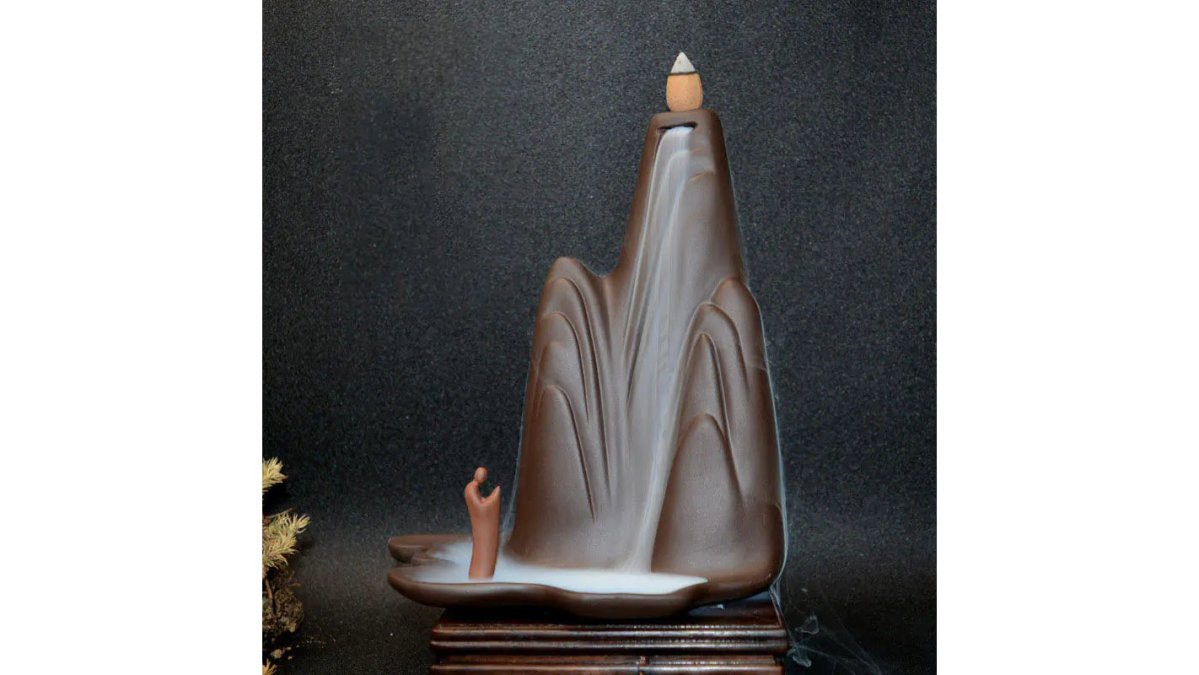
Purple Sand Ceramic Backflow Incense →
The Psychology of Perceived Value: Why Higher Prices Can Feel Worth It
Perceived value is the buyer's subjective judgment of what an item is worth, and it rarely tracks the actual production cost. A higher price can genuinely make a piece feel more valuable, especially when the craftsmanship is visible and the story behind it is clear. This is where many guides get it wrong: they frame the price gap as pure marketing.
Several well-documented effects explain why that amplification happens:
- Price-quality inference. When buyers lack other signals, they often assume a higher price means higher quality. That shortcut is useful when it is right and expensive when it is wrong.
- Anchoring. The first price a shopper sees, a gallery piece, a designer showroom tag, becomes the reference point against which everything else feels cheap or expensive.
- The endowment effect. Once a buyer imagines a piece in their own home, they value it more than they did on the shelf, which makes the premium easier to justify.
- Signaling and identity. A curated object can communicate taste, values, or care. Buyers pay partly for what the object says about them, not only for what it does.
- Scarcity and exclusivity. Limited runs and one-of-a-kind pieces raise perceived value because they cannot be replicated on demand.
- Story and provenance. Knowing the maker, the region, and the process turns a product into a narrative, and narratives are memorable in a way that spec sheets are not.
How to Tell Real Value From Manufactured Value
The practical test is to separate signals you can verify from signals you can only feel. Verifiable signals include visible joinery, the weight and feel of the material, a stated material origin, a repair or replacement policy, and a maker who can answer specific questions about the process. Manufactured signals include vague claims like "artisan-inspired," urgency language around limited drops, and prices that are high but unexplained.
Lifecycle Cost Analysis: When Paying More Now Saves Later
Lifecycle cost analysis compares the total cost of owning something over its full life, not just the purchase price. Applied to home goods, it usually favors the better-made option. Durable goods hold up to daily use, resist trends, and can often be repaired rather than replaced. A mass-produced accent piece might save money today and cost more across five years of replacements.
Conclusion
Judging value in curated home goods takes more than reading a price tag, and the honest answer is that some premium items are worth it while others are not. ELTStores builds its collection around pieces meant to earn their place in your daily rituals, from the handcrafted Purple Sand Ceramic Backflow Incense Burner to the energy-efficient LED Color-Changing Wall Light.

Frequently Asked Questions
What factors contribute to the higher price of curated home goods?
Curated home goods cost more because of artisan labor, small-batch production, and ethical material sourcing. A handcrafted ceramic incense burner takes hours to make, unlike a factory-molded version. Import duties, shipping, and the retailer's overhead also add up. When you buy curated home goods, you pay for the skill, time, and care behind each piece, not just the materials.
Is curated home decor worth the extra investment compared to big-box stores?
It depends on what you value. Curated pieces often last longer and carry a unique aesthetic that mass-produced items lack. A handcrafted ceramic backflow incense burner, for example, can be a lasting centerpiece, while a big-box alternative may chip or fade. If you want durable goods with a story, the extra cost can be worth it. For temporary or trend-driven decor, budget options may suffice.
How can you tell if a home goods brand is truly curated?
Look for transparency about material sourcing, production timelines, and artisan partnerships. Truly curated brands share who makes their products and how. They often use small-batch production and offer exclusive collections. Check for detailed product descriptions that mention specific materials like purple clay or American Bridgelux LED chips. If a brand can't explain its supply chain, it may not be genuinely curated.
How does ethical sourcing impact the cost of home accessories?
Ethical sourcing means paying fair wages, using sustainable materials, and ensuring safe working conditions. These practices raise production costs compared to mass-produced decor made in factories with lower labor and environmental standards. For example, a handcrafted ceramic burner made from responsibly sourced purple clay costs more than a plastic imitation. The higher price reflects the true cost of ethical production, which many shoppers see as value for money.