

Table of Contents
- Understanding Interactive Dog Training Toys Cost
- Price Ranges by Dog Puzzle Toys Type
- Treat-Dispensing Dog Toys and Their Price Points
- Durable Dog Toys for Active Dogs: Cost vs. Longevity
- Interactive Toys for Boredom: Budget-Based Selection
- Total Cost of Ownership and Value Assessment
- Matching Toy Cost to Your Dog and Training Goals
- Conclusion
- Frequently Asked Questions
Last Updated: October 15, 2026
Understanding Interactive Dog Training Toys Cost
Interactive dog training toys range from a $5 rubber ball to a $60 automated treat dispenser. What explains the difference, and what's worth buying?
Interactive dog training toys cost what they do because they solve different problems. A treat-dispensing toy engages your dog for 20 minutes; a puzzle toy builds problem-solving over weeks; an automated feeder reduces boredom and destruction long-term.
At ELTStores, we break down what drives toy pricing. The cost of interactive dog training toys reflects materials, design complexity, durability, and engagement time.
Understanding these factors stops you overspending on toys your dog ignores and underspending on ones that transform behavior.
Price Ranges by Dog Puzzle Toys Type
Dog puzzle toys span a wide price range. A simple one- or two-compartment puzzle costs $10 to $20, entry-level options that introduce problem-solving without overwhelming your dog.
Mid-range puzzle toys cost $20 to $40, with multiple compartments, varying difficulty, and durable construction that withstands moderate chewing and pawing.
Advanced puzzle toys with sliding pieces, rotating dials, and hidden compartments run $40 to $70 and demand more cognitive effort.
Budget puzzle toys use standard plastic; mid-range options add rubber for durability; premium toys use reinforced materials and intricate mechanisms.
A common mistake is buying the most expensive puzzle first. Most dogs must learn "work for your reward" before advanced puzzles. Start around $25 to $30, then upgrade if your dog masters it quickly.
Treat-Dispensing Dog Toys and Their Price Points
Treat-dispensing toys cost more because they require functional precision. A basic rubber ball with holes costs $8 to $15: your dog rolls it, treats fall out randomly.
Adjustable treat-dispensing toys run $15 to $30 and keep dogs engaged longer because the challenge varies.
Automatic treat dispensers with timers cost $40 to $80, dispensing treats on your schedule so your dog gets stimulation when you're away. Some include app controls or multiple speeds.
The cost increase buys functionality: a $12 toy requires physical manipulation, while a $60 automatic feeder gives behavioral control, scheduled treats that reduce separation anxiety and boredom-related destruction.
Treat-dispensing toys work best with the right treats: soft, small ones dispense reliably, while large or hard treats jam mechanisms. Budget $5 to $10 monthly for training treats that work.
Durable Dog Toys for Active Dogs: Cost vs. Longevity
Durable dog toys for active dogs cost more upfront.
Standard toys use thin rubber that punctures easily; durable toys use multiple layers, reinforced seams, and designs that distribute bite force.
For aggressive chewers, heavy-duty toys cost $40 to $80 and last 6 to 12 months, using nylon blends or medical-grade rubber that resist shredding.
Cost-per-use matters: a $15 toy lasting 3 weeks costs about $0.70 per day, while a $45 toy lasting 5 months costs about $0.30 per day. The expensive toy is cheaper over time.
Estimate how many weeks a toy survives, divide cost by weeks, multiply by 7 for daily cost. Under $0.50 per day is good value; over $1 per day needs a specific training purpose to justify.
Interactive Toys for Boredom: Budget-Based Selection
Boredom relief has a budget, and the right toy depends on how long your dog is alone, how fast they solve problems, and how destructive the boredom has become. Here's how to spend at each tier.
Under $15: DIY and entry-level
You don't need to buy anything to start. A muffin tin with tennis balls over hidden treats is a legitimate puzzle toy. A frozen stuffed rubber toy, kibble soaked in water and frozen overnight, delivers 20 to 40 minutes of engagement for the price of your dog's food.
If you buy, this tier gets a basic treat-dispensing ball ($8 to $15) or single-compartment slider puzzle ($10 to $15), starter toys that teach "work for the reward" but rarely hold attention past a few weeks.
Best for: puppies, dogs new to enrichment, and owners testing whether their dog engages with puzzle play at all before spending more.
$15 to $35: the value sweet spot
Most dogs should start here. Adjustable treat-dispensing toys ($15 to $30) let you change how easily treats release, so the toy stays challenging as your dog improves. Mid-range multi-compartment puzzles ($20 to $35) add sliding pieces, flaps, and drawers.
The trade-off is durability versus complexity: a $25 puzzle with many moving parts is engaging but fragile, while a $25 rubber dispenser is simpler but survives chewing. For chewers, buy rubber, not plastic mechanisms.
Best for: adult dogs with mild to moderate boredom, occasional restlessness, some destructive chewing, barking when left alone.
$35 to $70: when a higher price is justified
Spend here only when a specific problem justifies it:
- Your dog solves entry-level toys in minutes. A dog that empties a $20 puzzle in 90 seconds gets no enrichment from it. Progressive puzzles ($35 to $55) with adjustable difficulty extend the challenge.
- You are away longer than 6 hours. A single toy cannot cover a full workday. An automatic dispenser ($45 to $80) delivers engagement on a schedule, which is the only way to provide mid-day stimulation when no one is home.
You're not buying better enrichment at this tier, only duration and difficulty. If neither is your problem, the extra $30 does nothing.
Recordable Pet Talking Buttons →
$70 and up: the honest assessment
Motion-activated toys, app-connected dispensers, and camera-equipped treat launchers solve a narrow problem, engaging a dog with no human present, and carry ongoing costs: batteries, replacement parts, and app subscriptions.
Rule out the cheaper fix first: a second $25 toy rotated weekly often solves the same boredom problem as a $90 automated toy, because novelty holds attention. Automation wins only when your absence, not your dog's interest, is the bottleneck.
The budget ladder, in practice
- Start at $0 to $15. Try DIY and one entry-level toy for two weeks.
- If boredom behaviors continue, move to $15 to $35. Add one adjustable dispenser or mid-range puzzle.
- If your dog solves it too fast or you are gone all day, move to $35 to $70. Add difficulty or automation, not both at once.
- Only go above $70 if absence, not difficulty, is the bottleneck.
Most dogs are well served by steps 1 and 2. The mistake is skipping straight to step 4 because a listing promised "ultimate engagement." Engagement comes from fit, not price.
Total Cost of Ownership and Value Assessment
Most guides stop at the sticker price.
1. Purchase price. Entry-level puzzle and treat-dispensing toys run $10 to $25. Mid-range options run $25 to $45.
**2.
3. Consumables. Treat-dispensing toys only work if treats fit and dispense, soft, pea-sized training treats are reliable; hard biscuits jam most mechanisms.
4. Cleaning and hygiene. Puzzle toys with crevices trap saliva and residue. Dishwasher-safe toys save time; hand-wash-only toys cost 5 to 10 minutes per session.
5. Replacement. This separates good value from bad.
Put those together and a realistic annual picture looks like this:
- Minimal setup: one mid-range puzzle toy ($30) + treats ($10/mo) + occasional batteries ($15/yr) = roughly $165 in year one.
- Rotating setup: two to three toys ($75) + treats ($15/mo) + batteries ($25/yr) + one replacement ($35) = roughly $315 in year one.
- Automated setup: one dispenser ($70) + one puzzle toy ($30) + treats ($20/mo) + power ($30/yr) + replacement parts ($40) = roughly $410 in year one.
Convert to cost-per-use, the only fair comparison across toy types: purchase price plus consumables and power over the toy's life, divided by realistic engagement hours.
Example: a $30 puzzle toy used 20 minutes daily, 5 days a week for 4 months = about 28 hours.
A toy is good value when cost-per-engagement-hour is low and it's actually used.
Consumer product safety guidance on pet toy hazards and small parts
Matching Toy Cost to Your Dog and Training Goals
The right interactive dog training toys cost what they need to for YOUR dog and goals. Assess three factors honestly: engagement level, training objectives, and budget.
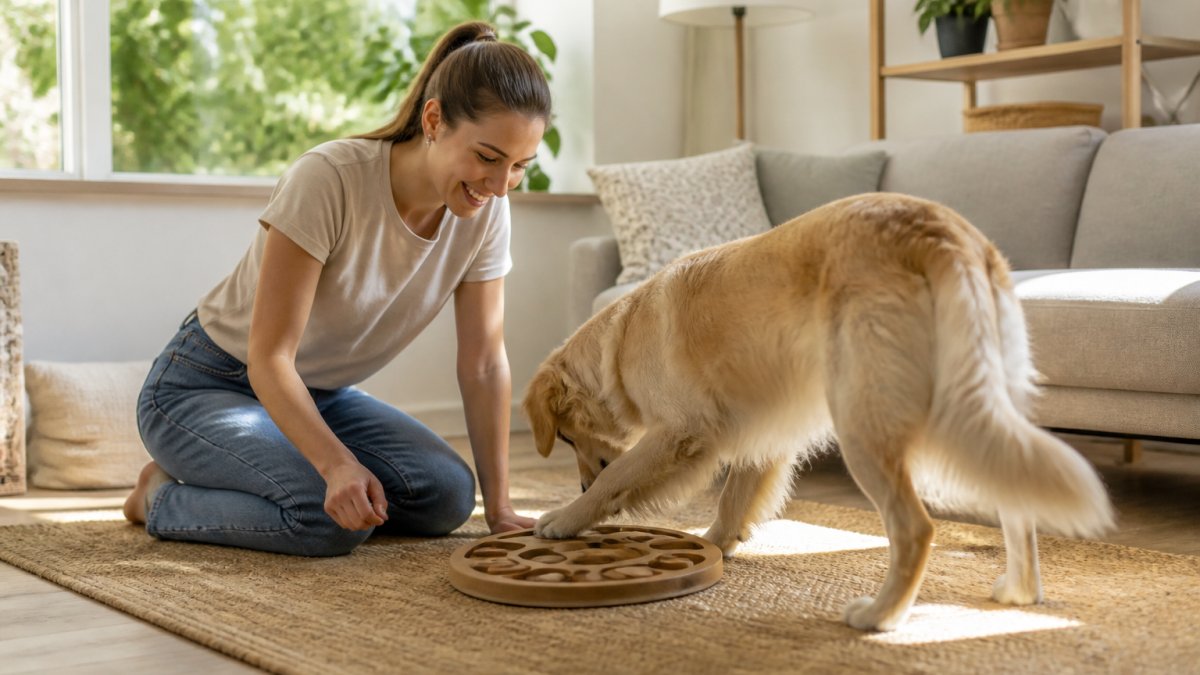
For adult dogs with boredom issues, spend $30 to $60 on mid-range toys.
For senior or anxious dogs, consider automatic dispensers ($50-$80), which provide predictable engagement without hard "work", mental stimulation without physical strain.
Training goals change the equation: impulse control calls for a simple treat-dispensing toy ($15-$25), problem-solving for progressive puzzles ($30-$50), and separation anxiety for an automatic dispenser ($60-$80) that addresses the specific issue.
The Recordable Pet Talking Buttons from ELTStores ($33.48) are a different category of interactive engagement.

Match cost to outcome: a toy that prevents boredom-related destruction or builds training progress is worth it; one unused after a week is overpriced regardless of the tag.
Conclusion
The cost of interactive dog training toys reflects what they deliver: engagement, mental stimulation, training support, and boredom prevention. Understanding price ranges by type, puzzle toys, treat dispensers, durable options, helps you avoid overspending on unneeded features and false economy on toys that work.
Start with a mid-range interactive toy ($25-$35) and assess over 2-3 weeks. Add a second if needed, and upgrade to automatic dispensers only if basics don't solve boredom or anxiety. Calculate cost-per-use, not purchase price. Most dogs find ideal engagement at $100-$200 annually.
At ELTStores, the best interactive dog training toys are the ones your dog actually uses. Explore our curated collection of pet accessories designed to create moments of joy and engagement in your daily routines. Shop now and discover toys that match your dog's learning style and your home's aesthetic.
Frequently Asked Questions
Are interactive dog training toys worth the cost?
Yes, when chosen correctly. Interactive dog training toys reduce destructive behavior caused by boredom and provide mental stimulation that physical exercise alone cannot. The cost-per-use improves dramatically over time, a $40 puzzle toy used daily for a year costs about 11 cents per day. Budget toys ($10-20) wear out quickly, forcing replacement; durable options ($30-60) often last 12+ months, making them better long-term investments. The real value lies in preventing behavioral problems and vet bills that stem from insufficient enrichment.
What affects the price of an interactive dog training toy?
Several factors drive cost: material quality (rubber, plastic, or reinforced composites), complexity level (simple vs. multi-step puzzles), durability rating for active dogs, battery or USB-C charging requirements, treat-dispensing mechanism sophistication, and brand reputation. Toys with automatic treat dispensing or motion-activated features cost 50-100% more than static puzzles.
How can I tell whether an interactive dog toy is durable enough for my active dog?
Check material composition, high-quality ABS plastic or reinforced rubber resists punctures and heavy chewing better than standard plastic. Read reviews specifically mentioning wear and tear over months of use, not just initial impressions. Look for toys rated for your dog's size and chewing intensity; toys labeled for 'aggressive chewers' use thicker materials and cost more upfront but avoid costly replacements. Test durability by examining seams, moving parts, and battery compartments, poor construction fails within weeks.
How many interactive toys does a dog need?
Most dogs benefit from 2-4 interactive toys rotated weekly to maintain novelty and engagement. Rotating toys extends their lifespan by reducing constant wear on one toy and prevents boredom from repetition. Start with one high-quality puzzle toy ($40-60) and one treat-dispensing toy ($25-40) to assess what your dog prefers. Add toys gradually based on your dog's engagement level and your training goals.